
Were the deliveries made on the ground — or only on paper?
Three addresses, 15.5 km ITwo minutes. In the affidavits submitted by Egged
Three addresses in Beit Shemesh, about 15.5 kilometers and two minutes between the first and last visit.
This is evident from the affidavits of service submitted by Egged. The same sequence repeats on three different days.
The Derech Ḳvud Association repeatedly receives inquiries from passengers who deny having received warning letters before collection cases were opened. The documents indicate that a notice was affixed to the door or that the recipient refused to sign; the passenger insists that no one came. Usually, it is difficult to decide between the two versions based solely on the documents. This time, a different check was possible: to place the affidavits side by side and compare the times.
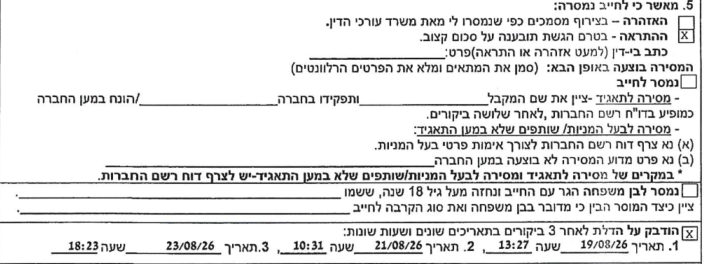
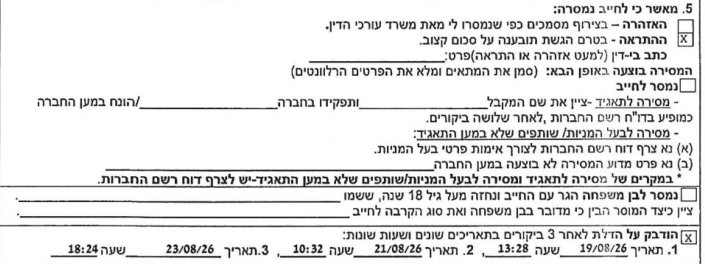
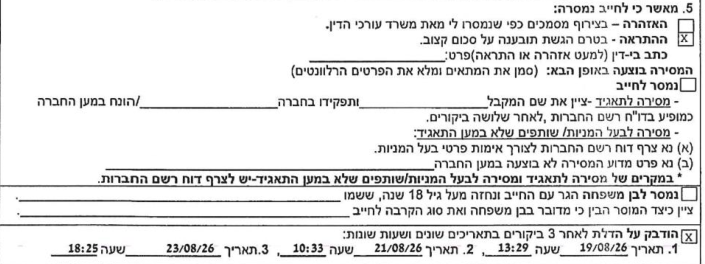
Now, a comparison of the service documents in three cases reveals an unusual timeline. These are three different addresses in Beit Shemesh — on Ben Ish Chai Street, Sderot HaAmoraim, and HaAdmor MiBelza Street. In the three affidavits "Sinouart Mohammed" Visits appear at regular intervals of one minute; the sequence repeats on each of the three days documented.
The listings side by side
| Delivery Stage | . | Ben Ish Hai | Sderot HaAmoraim | The Belzer Rebbe |
|---|---|---|---|---|
| First visit | 19.8.2026 | 13:27 | 13:28 | 13:29 |
| Second visit | 21.8.2026 | 10:31 | 10:32 | 10:33 |
| Paste | 23.8.2026 | 18:23 | 18:24 | 18:25 |
On the last day, three postings on doors are attributed to the informant — one at each address. According to the recorded times, only two minutes separate the first and the last posting.
What is the distance between the doors?
According to the examination of the driving routes specified in the request dated November 11, 2023, between the address on Ben Ish Chai Street and the address on HaAmoraim Boulevard, a route of 8.7 km, estimated at 14 minutesFrom Sderot HaAmoraim to the address on HaAdmor MiBelza Street, an additional route was presented of 6.8 km, estimated at 11 minutes.
Together Approximately 15.5 km and about 25 minutes by car, before parking, entering buildings, and reaching the doors. The straight-line distances recorded in the inspection — approximately 5.7 km and approximately 3.9 km, respectively — also demonstrate that these are not adjacent doors.
The driving estimates were checked at a later date than the delivery dates and do not constitute a reconstruction of the traffic situation on those days. However, the discrepancy between the documented route and the sequence of hours in the affidavits is clear and real.
And here are the documents.
Below are excerpts from the three affidavits of service. The records regarding the manner of delivery and the dates of the visits were kept; identifying details were redacted. The names of the passengers, the numbers of the houses and apartments, and the numbers of the files are not displayed.
Did the process server even go to serve the documents?
Three addresses, about 15.5 kilometers and two minutes. Were the deliveries made by drone? Behind this pointed question lies a real difficulty: How can one reach the three doors within the timeframes that morality itself has set?
The discrepancy between the distances and the recorded hours raises a serious suspicion that the deliverer did not leave his home at all to make the deliveries, and that the visits described in the affidavits took place only on paper. This is the suspicion that arises from comparing the records; Egged and the deliverer are required to provide an explanation and present the documentation of the actual visits.
If the times are intended to document the actual visits, it must be explained how the sequence is consistent with the distances. If these are the hours of entering reports, the actual times of the visits and the documentation on which the affidavits were based must be presented. Either way, repeating the words "delivery was made" is not enough to resolve the discrepancy.
- What exactly do the visiting hours recorded in the affidavits represent?
- What real-time documentation exists for visits and infections — photos, location data, or system logs?
- How are the service documents checked before they are used as a basis for collection proceedings?
A passenger who is required to pay delivery expenses is entitled to receive an explanation when the documents on which the claim is based present such a sequence. In this case, the explanation should come from Egged and from the process server.
The findings do not constitute a judicial ruling regarding forgery and do not prove that all of Egged's deliveries are flawed. House numbers were removed from the publication; the distances were calculated between the full addresses in the documents.